

From Olympic champion to presidential challenger: Vessela Letcheva’s bid to change world shooting
With two Olympic silver medals, five world titles and decades of experience in sports administration, the Bulgarian is emerging as a serious challenger to Luciano Rossi. Her candidacy also highlights a striking imbalance in the leadership of international sport.
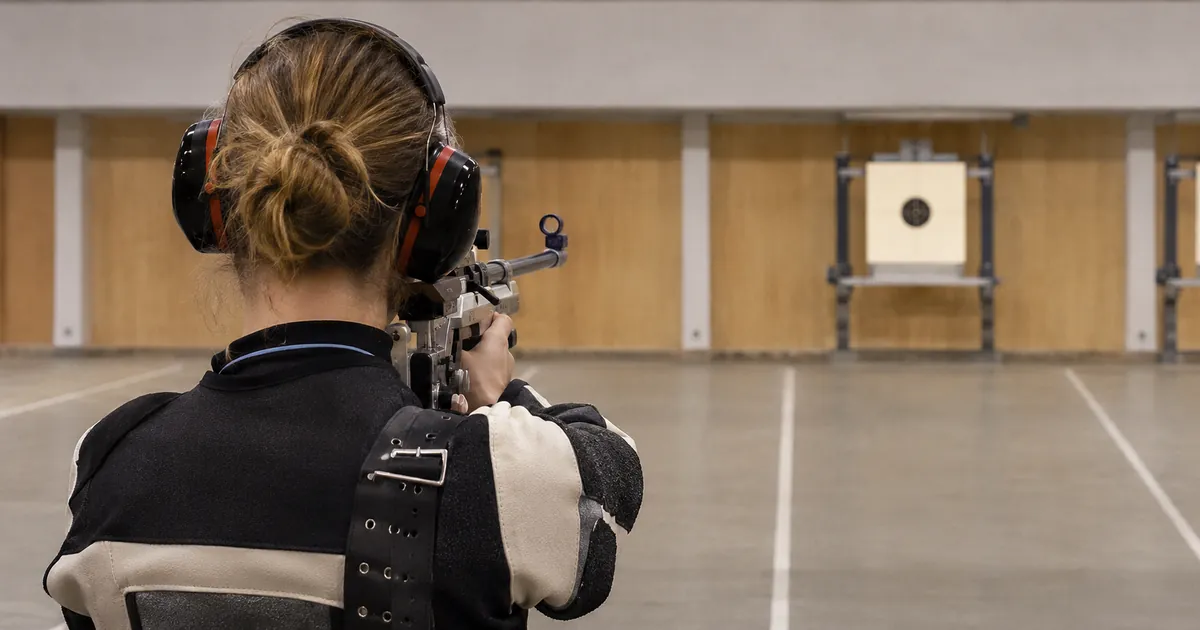
When Vessela Letcheva won her second Olympic silver medal in Barcelona in 1992, she had already spent much of the previous decade at the top of international shooting. She had five individual world titles to her name and would eventually accumulate 31 World Cup victories, a record that placed her among the most successful rifle shooters of her generation.
More than three decades later, the 62-year-old Bulgarian is pursuing a different kind of victory. On December 14, in Rome, she will seek to become president of the International Shooting Sport Federation (ISSF), challenging the incumbent, Luciano Rossi, in an election overshadowed by disputes over governance and uncertainty about the sport’s Olympic future.
Her candidacy has attracted attention beyond Bulgaria. On November 14, the Italian newspaper *La Repubblica* described her as Rossi’s most dangerous rival, a notable assessment in the president’s home country. Ukraine’s Kostyantyn Pyvovarov is also contesting the election, although reliable public evidence of voting intentions among national federations remains scarce.
Letcheva’s credentials offer a substantial argument in their own right.
At the 1988 Seoul Olympics, she finished second in the women’s 50-metre rifle three positions event. Four years later, in Barcelona, another silver followed, this time in the 10-metre air rifle. Her five individual world championship titles came between 1986 and 1990, when Bulgarian shooters were among the sport’s leading competitors.
Olympic gold eluded her. Almost everything else did not.
Unlike many former champions who have moved into sports politics, Letcheva has spent much of her subsequent career in public administration. She headed Bulgaria’s State Agency for Youth and Sports between 2005 and 2009, served as caretaker sports minister in 2022 and 2023, and holds a doctorate in sports science.
In March 2025, she was elected president of the Bulgarian Olympic Committee. Legal challenges delayed her formal registration until June 2026, adding another chapter to a career that has required navigating the sometimes contentious world of sports administration.
She also leads the Bulgarian Shooting Union and serves as a vice-president of the European Shooting Confederation. Her route to the ISSF presidency has involved considerably more than a famous sporting name on a ballot paper.
Yet her candidacy would carry historic significance.
Founded in 1907, the ISSF has had eight presidents, all men. In nearly 120 years, no woman has occupied its highest office.
The contrast with the sport’s changing competitive landscape is difficult to overlook.
According to the ISSF, women accounted for 41% of active international shooters in 2025, with participation approaching parity in rifle and pistol disciplines. At the Los Angeles Olympics in 2028, shooting will have 170 quota places for women and an equal number for men.
The trend is particularly visible among younger competitors. France’s national shooting federation reported that its female membership had tripled over two decades, while women represented 45% of its elite athletes. In Germany, nearly 39% of shooting federation members aged 20 and under are female.
But the growth of female participation has not been matched by comparable change at the top of international sports organisations.
A survey published in April by the Sport Integrity Global Alliance found that just three of the 30 international federations belonging to the Association of Summer Olympic International Federations were headed by women.
They included Petra Sörling, president of the International Table Tennis Federation, former golfing champion Annika Sörenstam at the International Golf Federation, and Zena Wooldridge, who leads World Squash.
Women occupied 32% of executive positions across the federations surveyed, but only 10% of their presidencies. Indeed, the number of female presidents had fallen from four to three since the organisation’s previous survey in 2024.
The figures point to a persistent glass ceiling, even as female representation in governing bodies gradually improves.
The election of Kirsty Coventry as the first woman president of the International Olympic Committee in 2025 demonstrated that change is possible at the highest level. But across the international federations responsible for individual Olympic sports, leadership remains overwhelmingly male.
Letcheva would join a small group of women who have reached the summit of international sports administration. Her record as an athlete and administrator gives that prospect a significance extending beyond symbolism.
It also raises a broader question about how the sport intends to connect with its next generation.
Despite growing participation among young women, shooting still struggles to establish itself as a compelling spectator sport for younger audiences. Its complicated scoring systems and relatively limited mainstream media exposure remain obstacles to attracting followers beyond established shooting communities.
The ISSF has taken steps to address the problem, including revisions to competition formats, digital initiatives and youth development activities. But evidence that those measures have produced sustained growth in younger audiences remains limited.
The sport’s exclusion from the medal programme of the Dakar 2026 Youth Olympics, where it participated instead through an engagement programme, underlines the challenge of maintaining visibility within an evolving Olympic landscape.
For Letcheva, that question is inseparable from the federation’s wider difficulties.
At the ISSF General Assembly in November 2024, delegates were not asked to approve the previous year’s accounts. The federation explained that problems transferring information from former financial consultants had delayed the preparation and circulation of the documents.
One delegate complained that he had not received the relevant financial material. When the accounts were discussed, the federation acknowledged that the 2023 report could not be submitted for approval at that meeting.
The audited statements, subsequently made public, showed cash and bank balances falling from approximately €12.8 million to €9.6 million in a year. The audit itself issued an unqualified opinion, meaning the financial statements met applicable accounting requirements in all material respects.
Neither the decline in cash nor the delay in presenting the accounts establishes financial misconduct. But the episode raises legitimate questions about the timeliness of financial reporting and the information available to member federations when they are asked to assess their leadership.
A separate controversy has added to the tensions surrounding Rossi’s bid for a second term.
Earlier this month, Alexander Ratner, president of the European Shooting Confederation and a potential presidential challenger, was suspended for three years by an adjudicatory panel operating within the ISSF’s Integrity Unit.
The panel found violations of the federation’s integrity rules relating to the 2025 European confederation election. Ratner has disputed the findings and appealed to the Court of Arbitration for Sport, while the ISSF maintains that the disciplinary procedure was independent and based on serious misconduct.
The case does not establish wrongdoing by Rossi. But the removal of a prominent electoral rival, weeks before the vote, has added to an already contentious campaign.
Rossi can point to reforms during his first four years. The federation has introduced an integrity framework, revised competition formats and received a substantially improved score in a governance assessment conducted by the Association of Summer Olympic International Federations.
The ISSF’s score rose from 161 to 182 out of 240 between 2024 and 2026, an increase of 21 points, significantly above the average improvement among the federations assessed.
That progress is measurable. Its practical significance, however, is open to debate.
Governance assessments evaluate policies, structures and procedures. They do not necessarily establish whether those reforms have strengthened confidence among member federations, improved the handling of disputes or generated greater public interest in the sport.
The continuing electoral controversies illustrate the distinction between institutional reform on paper and the more difficult task of building trust.
Letcheva has made transparency a central element of her campaign.
In a programme published on November 19, she stated her intention to make annual financial reports public and distribute them directly to member federations. She also announced proposals to livestream meetings of the ISSF’s governing bodies, share sponsorship revenues with national federations and establish a marketing and partnerships committee.
Her programme places particular emphasis on young athletes, modern broadcasting and closer cooperation with the International Olympic Committee.
That final objective may prove the most consequential.
Although shooting is confirmed for Los Angeles in 2028, its inclusion at Brisbane four years later has not yet been settled. The IOC is reviewing its Olympic programme, with decisions expected in April 2027.
For a sport whose Olympic athlete quota has fallen from 390 at Rio 2016 to 340 for Los Angeles, the implications are significant.
Letcheva argues that shooting needs better communication, stronger commercial partnerships and greater investment in its younger competitors if it is to remain relevant.
These are campaign proposals, not proven solutions. Their implementation would require financial resources and support from member federations. Nor could any president personally guarantee the sport’s Olympic future.
But Letcheva enters the contest with a combination of qualifications that is difficult to dismiss: exceptional sporting achievements, experience in government and extensive involvement in Olympic administration.
Whether those credentials are sufficient to defeat Rossi remains uncertain. Some federations may favour continuity after four years of organisational change. Others may regard the next Olympic cycle as an opportunity to reconsider the federation’s leadership.
For Letcheva, the election offers the possibility of becoming the first woman to lead a federation whose athletes have long since moved towards gender parity.
For the ISSF, it poses a different question: whether the experience of those who have competed at the highest level can help reshape an organisation now facing some of the most consequential decisions in its history.
After a career spent first competing for medals and then administering sport, Letcheva will discover in Rome whether national federations are prepared to entrust her with that responsibility.